Engine-derived ROI benchmarks for Broken Bow-area short-term rentals, single-family rentals, and small commercial properties. Numbers come from running real fixtures through the Cost Seg Smart engine — same engine that produces your actual study. Studies from $495.
Operated by Cost Seg Smart. Studies are IRS-aligned, audit-defense-included. 5 fixture benchmarks computed May 2026.
Numbers above are engine-estimated outputs from running 5 representative fixtures — not promises about what your specific property will produce. Results vary based on actual property condition, year built, renovation history, county assessor data quality, and rental treatment (STR vs LTR). Full per-fixture table, neighborhood breakdown, and downloadable CSV/PDF on the Broken Bow cost seg benchmarks page.
Hochatown — the unincorporated cabin corridor immediately north of Broken Bow proper, adjacent to Beavers Bend State Park — has become one of the fastest-growing STR markets in the country over the past five years, driven almost entirely by Dallas-Fort Worth weekend traffic and the lower entry price point relative to mountain-and-coastal alternatives. From a cost-segregation standpoint, the Broken Bow / Hochatown market sits in an unusual structural position.
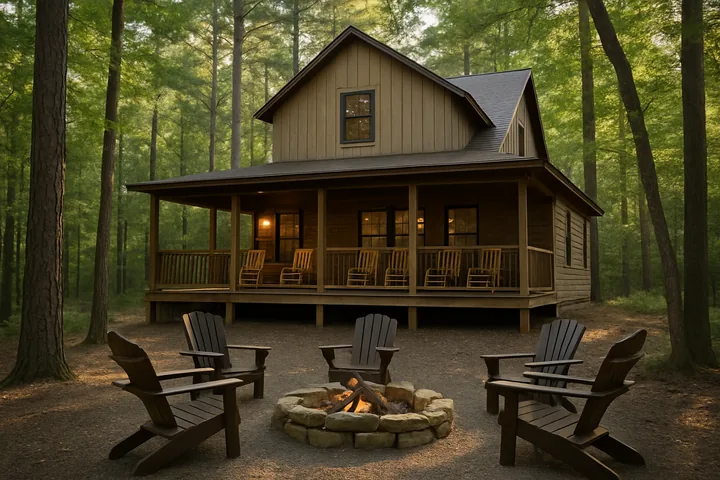
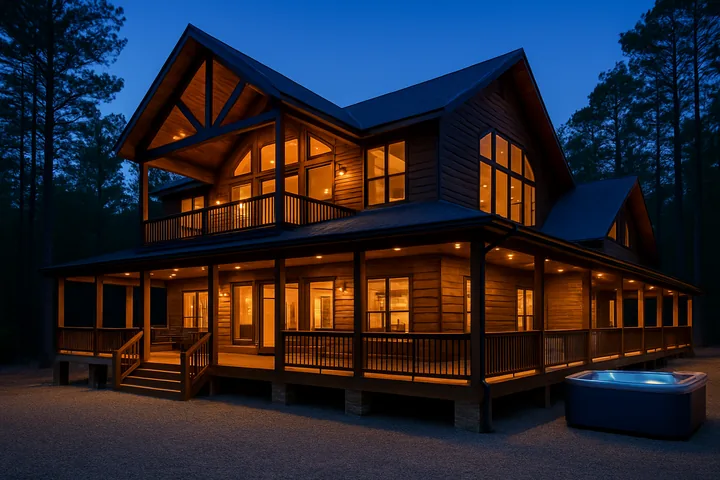
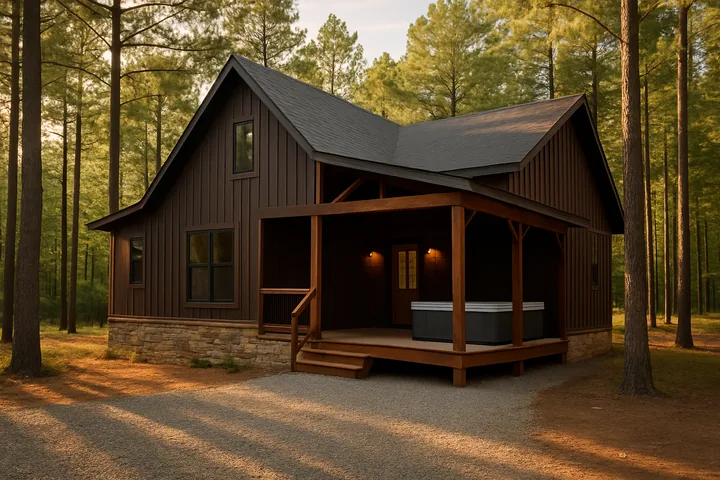
The structural advantage is the local cabin construction profile. Post-2017 new-build cabins in Hochatown are dense with the components the engine reclassifies most aggressively: oversized covered decks with hot tubs, gravel drives and graded sites, fire-pit and outdoor-kitchen hardscape, sleeps-12+ layouts with bunk-bed rooms and game rooms, multiple full bathrooms, and significant FF&E density designed specifically for family STR product. Land allocations run unusually low (16–22% across the neighborhood profiles in our engine) because McCurtain County land is comparatively cheap and the structure-plus-improvements component dominates the basis.
The structural disadvantage is Oklahoma's partial decoupling from federal §168(k). Oklahoma historically allowed only 80% of federal bonus depreciation, with 20% added back to state taxable income. For a Hochatown buyer in Oklahoma's 4.75% top marginal bracket, the addback effect reduces the headline federal-savings number by 1–2 percentage points of the accelerated reclassification. Compare to a Texas-resident buyer (no state income tax) doing the same Hochatown deal — same federal benefit, no state addback at all.
The buyer-side reality is that most Hochatown buyers are Texas residents, meaning the practical tax math frequently runs federal-only. The 4-hour drive from DFW makes Hochatown the first-STR market for a sizeable cohort of Texas investors who would otherwise have stretched into Destin or Gulf Shores.
Decoupling: Verify current-year Oklahoma conformity treatment with your CPA — Oklahoma's bonus-addback methodology has been adjusted multiple times in the past five years and may change again. The federal deduction itself is unaffected; only the Oklahoma-side reconciliation moves.
Verify with your CPA. State tax conformity rules for federal §168(k) bonus depreciation are adjusted frequently — multiple states have modified their treatment two or more times in the past decade. The general framing on this page reflects our understanding as of May 2026, but you should always verify current-year treatment with a qualified CPA or tax attorney before relying on specific dollar projections for your situation.
These aren't rough estimates. Each fixture was run through the same engine that produces your actual study — RSMeans 2024 base costs, BLS PPI time index, county assessor land allocation, IRS Pub. 946 / Rev. Proc. 87-56 MACRS classification, 100% bonus depreciation per OBBBA.
| Purchase price | $495,000 |
| Depreciable basis | $422,878 |
| Land allocation | 14.6% |
| 5-year reclassified | $84,405 |
| 15-year reclassified | $25,462 |
| Total reclass | 26.5% |
| Purchase price | $565,000 |
| Depreciable basis | $487,369 |
| Land allocation | 13.7% |
| 5-year reclassified | $95,160 |
| 15-year reclassified | $29,922 |
| Total reclass | 26.2% |
| Purchase price | $545,000 |
| Depreciable basis | $462,868 |
| Land allocation | 15.1% |
| 5-year reclassified | $89,147 |
| 15-year reclassified | $29,253 |
| Total reclass | 26.1% |
| Purchase price | $725,000 |
| Depreciable basis | $629,228 |
| Land allocation | 13.2% |
| 5-year reclassified | $122,716 |
| 15-year reclassified | $39,748 |
| Total reclass | 26.3% |
| Purchase price | $325,000 |
| Depreciable basis | $283,075 |
| Land allocation | 12.9% |
| 5-year reclassified | $29,344 |
| 15-year reclassified | $18,208 |
| Total reclass | 16.8% |
Cost-seg ROI varies more by neighborhood than by city. Broken Bow's 5 sub-markets each have their own land-allocation pattern and property archetype:
| Neighborhood | Typical value | Typical land allocation | Profile note |
|---|---|---|---|
| Hochatown | $495,000 | ~20% | The cabin epicenter — unincorporated McCurtain County north of Broken Bow proper, immediately adjacent to Beavers Bend State Park. Newer-build cabin stock dominates (2017–2023 vintage). Lowest land allocation in the network. Permit-light regulatory regime. |
| Beavers Bend State Park corridor | $565,000 | ~24% | Cabin and SFR mix along Highway 259 / Stevens Gap Rd, west of the state park entrance. Slightly higher land allocation than Hochatown proper because of larger lot sizes. Forest-adjacent setting commands an ADR premium. |
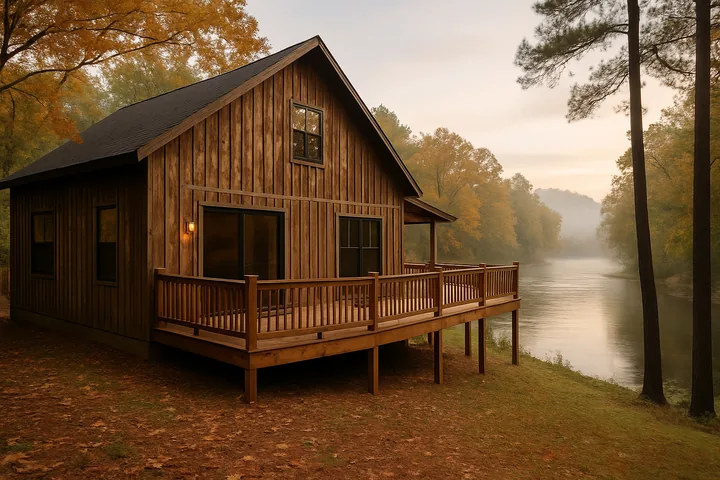
| Mountain Fork River corridor | $545,000 | ~22% | Riverfront and river-adjacent cabin stock along Mountain Fork River. Fly-fishing traffic adds a niche demand layer. River-frontage premium reflects in slightly higher land allocations. |
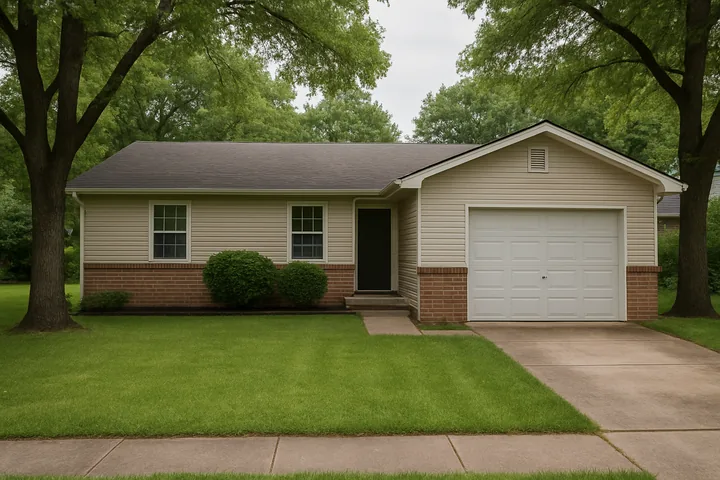
| Broken Bow proper | $325,000 | ~16% | Town of Broken Bow itself — lower-cost SFR market, mix of long-term-rental and small STR. Lowest absolute pricing, lowest land allocation, weakest STR ADR profile. |
| McCurtain County rural | $285,000 | ~14% | Rural cabin and land-tract product outside the Hochatown / Beavers Bend cluster. Lowest entry pricing but weaker STR demand — sometimes used as LTR or owner-occupied retreat. |
Methodology note: "Typical land allocation" reflects baseline patterns for the sub-market. For ultra-premium or resort-tier inventory where reconstruction cost exceeds 2.0× the implied depreciable basis after subtracting baseline land, the engine applies a premium land floor (~50%) to keep the study within audit-defensible territory. This means individual fixture engine output may exceed the neighborhood typical — especially for resort-tier ski-in/ski-out, beachfront, or view-premium product where land scarcity dominates value. See the /data/ page for per-fixture land-source attribution. Results vary substantially by specific property condition, renovation history, and assessor records.
McCurtain County and Hochatown are among the most STR-permissive jurisdictions in the United States. Hochatown itself is unincorporated, so there's no municipal zoning restriction on short-term rental operation — Oklahoma state-level tourism registration and lodging tax remittance apply but the regulatory burden is minimal compared to municipalities with VHR permit caps (Tahoe, Joshua Tree, Austin). McCurtain County requires a lodging tax collection registration but does not currently cap STR density or limit operations by zone. The bigger regulatory risk is local — informal community pushback and county-level discussions about future regulation have surfaced periodically as cabin density has increased. Buyers should model conservative hold-period assumptions accordingly. Material participation under §469 is achievable for self-managing operators given the relatively low density of full-service property managers in the market; many Hochatown owners self-coordinate via apps like Hospitable or OwnerRez and clear the >100-hour test reasonably easily.
For the full IRS-rule reference layer (§168(k), §469 material participation, state conformity), see irsdepreciationrules.com — our open reference site.
Modestly, and only for Oklahoma-resident owners. Oklahoma historically allowed only 80% of federal §168(k) bonus depreciation, with the remaining 20% added back to Oklahoma taxable income in the year claimed (and depreciated over the regular MACRS schedule for state purposes). For 2025+ acquisitions under OBBBA's 100% federal bonus, the practical effect is that 20% of the federal bonus is recovered on the Oklahoma return — at the 4.75% top marginal rate, that's roughly 0.95% of the accelerated reclassification dollars. For a Texas-resident buyer (no state income tax), the addback doesn't apply at all — federal §168(k) at 100% is the entire tax story. Most Hochatown buyers are Texas residents, so in practice the Oklahoma addback affects a minority of owners.
Two compounding factors. First, McCurtain County land is comparatively cheap — engine land allocations for Hochatown cabins run 16–22%, vs 26–34% for Tahoe lakefront and 22–28% for Gatlinburg cabins. Lower land allocation means more depreciable basis as a percentage of purchase price, which means higher reclassification dollars per dollar of basis. Second, the Hochatown new-build cabin product (2017+ vintage) is unusually dense with the components the engine reclassifies most aggressively — large covered decks, hot tubs, fire pits, gravel drives, hardscape, oversized FF&E packages designed for family bookings. Engine median reclass for Hochatown 5-fixture runs comes in around 24–30%, at the top of what residential STR cost seg supports.
Two practical differences. (1) Land allocation: Hochatown cabin sites in the forest corridor near Beavers Bend run 16–22% land allocation; Broken Bow city proper SFRs run lower yet (14–16%) because the town itself has lower land values but also weaker STR demand. (2) ADR and STR-vs-LTR mix: Hochatown is overwhelmingly STR; Broken Bow city proper is mostly LTR or owner-occupied, which means the engine doesn't apply the STR FF&E uplift and the reclass ratio drops a few percentage points. For STR purposes the location decision is overwhelming — Hochatown is where the cabin economy lives — and the cost-seg differential just reflects that reality.
Yes — meaningfully easier for self-managing operators. The IRS test requires average customer use under 7 days (Hochatown overwhelmingly satisfies) and material participation, typically >100 hours of active operations AND more than any other person spends. The reason Hochatown is easier: the local full-service property-management ecosystem is less mature than in Tahoe, Gatlinburg, or Destin. Many Hochatown cabin owners self-coordinate cleaning, booking, and maintenance directly via apps like Hospitable, Hostfully, or OwnerRez, which keeps the manager-hours competitor lower than in markets dominated by Vacasa or large local managers. The test is far from automatic and still requires contemporaneous hour-tracking — but the structural conditions favor it.
Not the study's component analysis or MACRS classification directly. But park proximity affects two upstream factors. (1) ADR / occupancy economics — park-adjacent cabins command meaningful ADR premiums during peak season (April–October), which feeds the operating margin that determines how valuable the Year-1 tax savings actually is. (2) Hold-period assumption — properties immediately adjacent to the state park face less ADR risk from new-cabin supply growth in the broader corridor, supporting longer hold-period modeling. For the engine's purposes, a $565K Beavers Bend cabin and a $565K Hochatown cabin produce very similar reclassification outputs.
More general cost-seg questions answered at costsegsmart.com/faq/.
Cost Seg Smart studies are IRS-aligned, engineering-reviewed, and include written audit defense. Pricing is transparent and starts at $495 for residential properties under $300K — full pricing on the main site.